How to Make Your Own "Sheet Yarn"

sheettemp.jpg

Do you happen to have an extra old sheet or two lying around the house you haven't used in forever? If so, I've got the perfect DIY for you to put those sheets to good use! 

So I was at Wal Mart the other day, and I came across these super duper cheap twin sheet sets and thought to myself, "surely there is something I can make with those!" Which is kind of weird, because who sees sheets and thinks they can make something with them? Anyways, I talked myself out of buying them that day, because I couldn't quite think of something I could make with them, and I probably shouldn't just buy random sheets like a crazy person.

Later, I come across this image of a super cute little crochet rug, and I thought DING DING DING. The cheapo Wal Mart sheets must be mine! I could cut them up and create an awesome rug. So my next trip to the store, I grabbed the last two sheets on the clearance shelf and set off to cut those suckers.

As I was chopping away, I thought it'd be a good idea to show you how I went about cutting the sheet for my rug. So I snapped some photos along the way, and prepared a little how-to for making your own "sheet yarn"!

I will say that with the sheet material I used, it will create a "rag" effect, meaning it's not a super clean-cut yarn. The edges fray and its a little imperfect. Which I'm totally okay with. But if that's not your thing you could have a go at the jersey knit sheets. I actually would like to experiment with those in the future.

Here's how to cut your sheet yarn:

What you'll need:
sheets of choice (I used two cheap twin sheet sets-- you'll need quite a bit of material to make a big project like a rug)
pair of sharp scissors
yard stick or ruler (optional)

Instructions:

First I worked with my flat sheet (not the fitted). I laid it flat, and cut the seam off all the way around the sheet. 

Next you'll start on your first strip of your yarn. I cut down the long side of the sheet (this means you'll turn the corner less than on the short side). I made my yarn two inches in width. If I told you that I exactly measured out two inches every time I cut, I'd be lying. I simply just eyeballed it and that worked out for me. But if that's not your cup of tea and you're not lazy like me then you could use your measuring stick and make marks on your sheet with a pen or marker.

Cut all the way down the long side until you reach about an inch from the end, then STOP cutting. This is where you will turn. Think of the design that you'll be cutting as a snake that just slithers back and forth with out stopping (that's actually gross to think about, snakes are sick). Then, going in the opposite direction and two inches from the cut you just finished, you'll cut down to the other side.
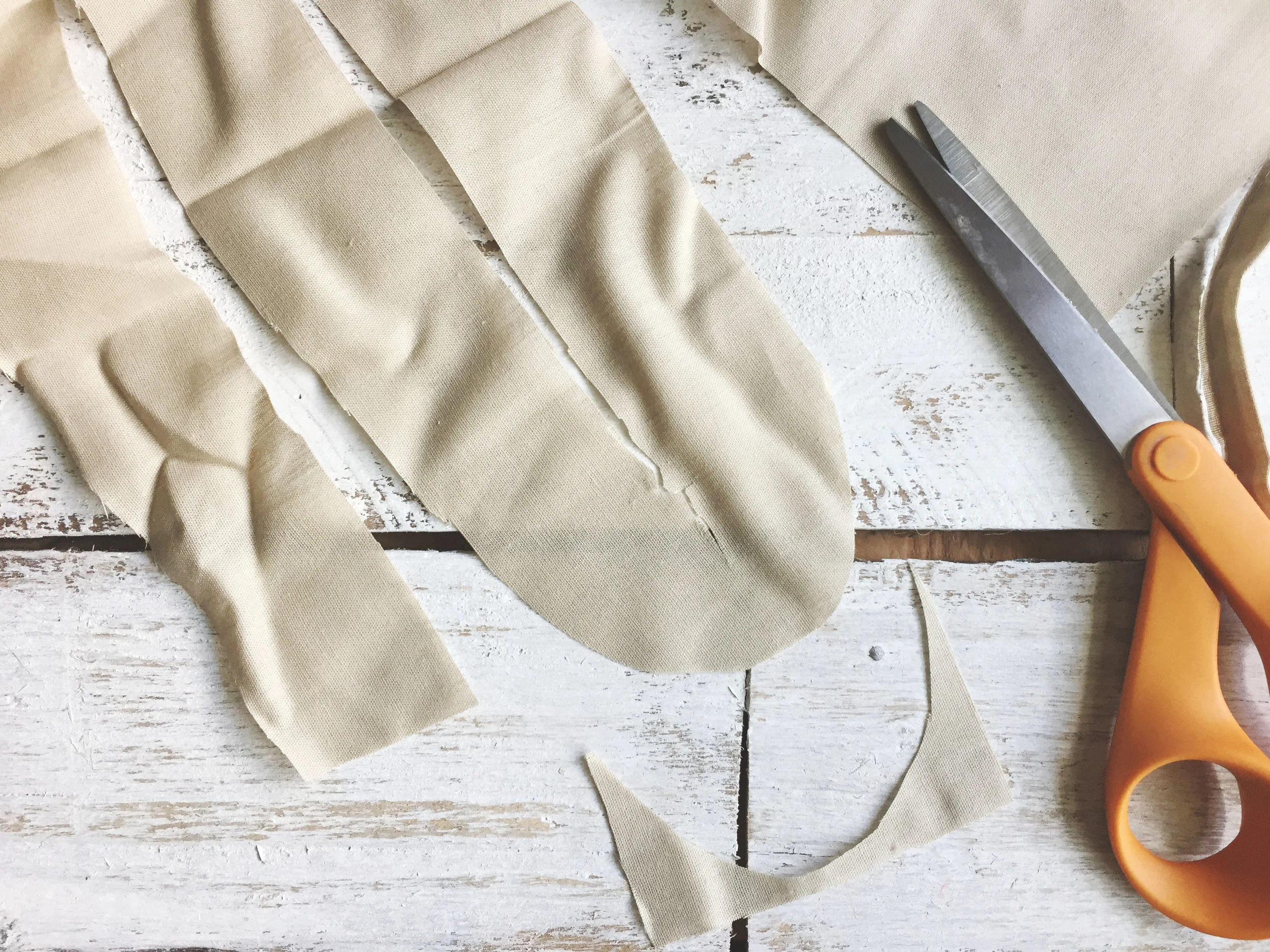
Now, you can do this as you go or wait until you've cut the whole sheet, but you'll need to round off the corners of the ends where you started going in the other direction. This is important because when crocheting the corners will stick out of your project, and its not pretty. 

You'll continue cutting back and forth until you reach the other side of the sheet (you can see my work in progress above). I will say that it takes some time to cut all the sheet, but in my opinion it's totally worth it. Think of all the awesome things you can make with sheet yarn, hello?!

After everything is cut, wind your yarn into a giant ball. Then you can marvel at the massive glob of potential! 

As far as the fitted sheet goes, all you have to do is cut out the elastic part of the sheet. Mine was all along the shorter side of the sheet, so I just cut along the elastic and around the seam, and then just cut it like the flat sheet. If the elastic is in the corners only you may have to do some additional cutting to make it to where the yarn can be cut continuously.

And there you have it! A super easy and upcycled project. Be sure to keep an eye out for my sheet rug pattern to be released in the near future!
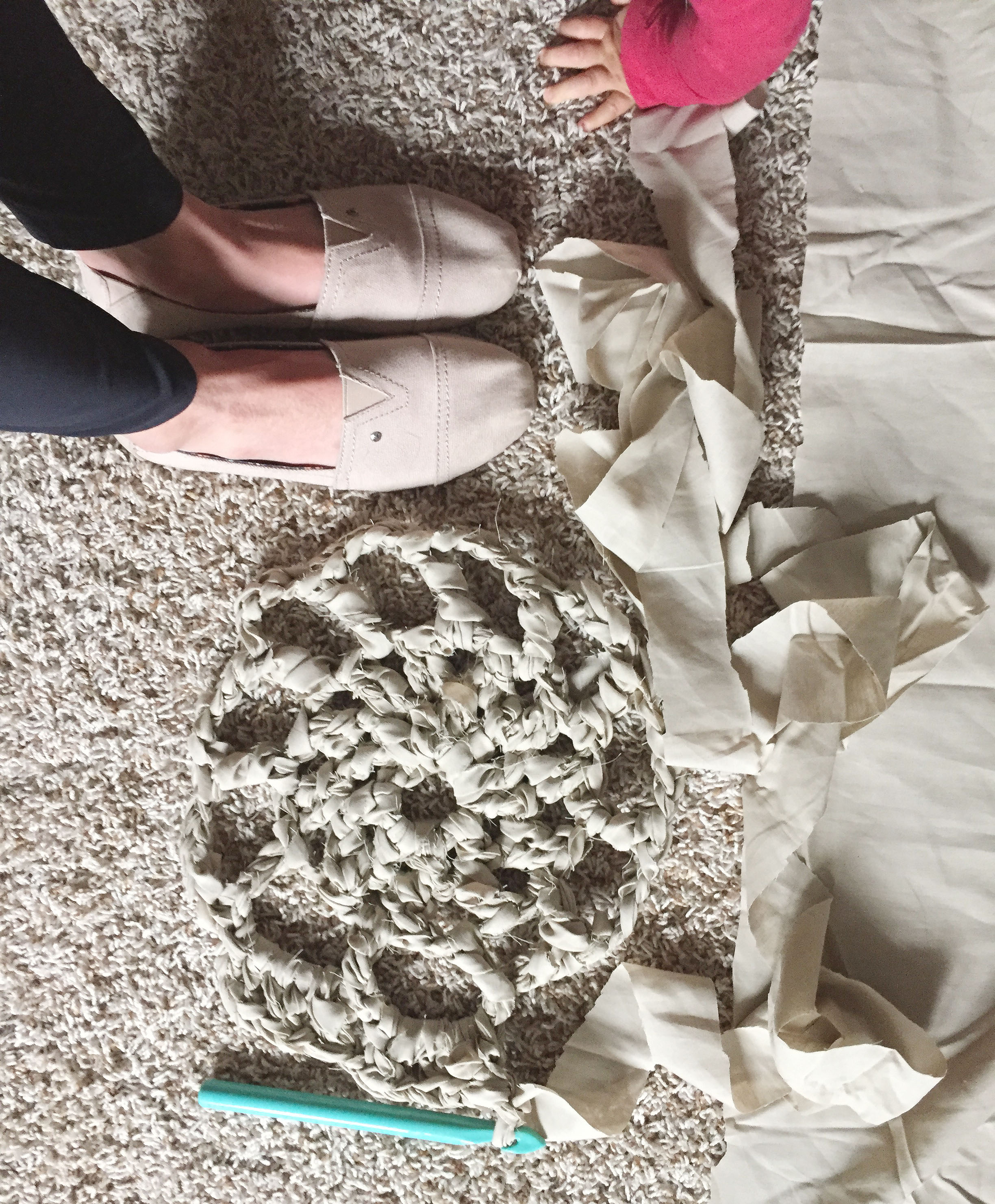
Have a beautiful day, and happy sheet yarn making!!
-Meg
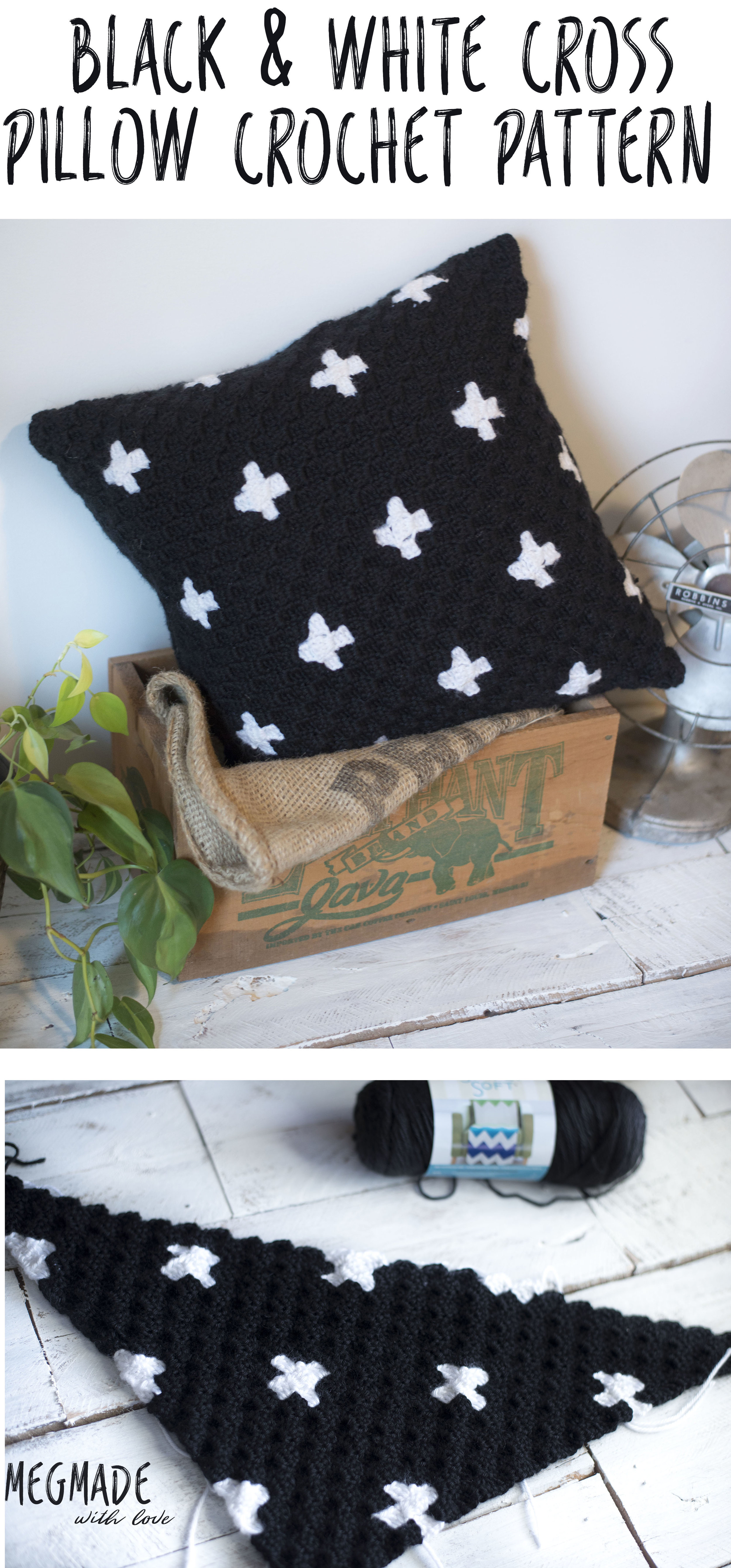
Crochet Black and White Cross Pillow Cover Pattern

So this project has been a long-time coming, and I'm super excited to get it out into the world! I'm pretty sure I started it in February, but it just got pushed to the side for whatever reason and it seemed like I had to overcome way too many obstacles to get this sucker done! Which is kind of hard to imagine because it's just a pillow cover, but truly... I feel like this project was cursed. ha!  So to say that I am relieved to finally be typing this blog post would be an understatement. 

I will say that the way it turned out (which was PERFECT) made all the trouble worth it. I really like this pillow. It's simple, and cute and I love how the corner to corner design kind of made it look quilted.

Which leads me to my next point: this pillow was created using the corner to corner method of crocheting. If you've never tried your hand at c2c, then this is a great project to jump on in (there is a ton of good info on c2c here if you've never heard of it). Because guess what? This was my first c2c project! I was kind of hesitant to learn how to do it, but I'm really glad I finally did, because it's actually a really enjoyable way to crochet. Plus I feel like it works up quicker.

Below is the graph I created for the pillow. It is 29 rows by 29 rows, and after completed makes a 16x16 inch pillow. 

For the pillow I used Caron Simply Soft in Black and White, along with a size F crochet hook (I thought this would make the squares more "tight"). If you chose to use another worsted weight yarn, I will say that it may be larger because Caron Simply Soft is slightly thinner than many other yarns it's weight. 

So like I mentioned the pattern is for a pillow COVER, but you could make it simply a pillow if you felt so inclined. I made it with the design on the front side, and on the back I chose to do two pieces that buttoned together in black. When doing the back part, I had to learn how to crochet a c2c rectangle, which was interesting, but easy to get the hang of.

Above are the three pieces I used to make the pillow cover. I did the front in the cross design then made two smaller rectangles for the back, which I attached three buttons to.

Above are the three pieces I used to make the pillow cover. I did the front in the cross design then made two smaller rectangles for the back, which I attached three buttons to.

As far as button holes go, the cool thing about c2c is that there are little slots that naturally occur in the project that were perfect for my buttons to slip right into. I had one inch buttons and those fit perfectly.

What you'll need:
Size F hook (3.75 mm)
Caron Simply Soft yarn in Black and White (3 skeins black, 1 white)
three 1" buttons
Large tapestry needle
16x16 inch pillow (I made mine with two pieces of black fabric and poly fill)
Black thread
sewing needle

Dimensions:

Approximately 16x16 inches

Instructions:

-So like mentioned before, above is the graph I made (using Stitch Fiddle, great resource!) for the front side of the pillow cover. This will be your guide to making the pillow.

-For c2c, you begin in one corner (and it doesn't matter which corner you start in). And you read the graph diagonally. A helpful tip is to mark off what row you just did with a pen or marker.

-For the directions on how to do c2c if you've never done it, I'm going to send you to this video created by The Crochet Crowd (its how I learned).
In the video, he will teach you how to begin the c2c, increase as well as read the graph. Also this video will explain how to c2c rectangle, which is what you'll need to know for the back of the pillow cover. 

**An important note for changing colors** (I found this out the hard way) So, because the colors are so opposite, they will really stand out if you can see a color change. So what I found was, it didn't matter what color I just finished, if I was slip stitching into a different color "pixel" next, I would switch colors BEFORE slip stitching. And if I was changing from say for instance, white to black, but the next "pixel" color that I would slip stitch into was white(the same color), then I wouldn't change the color until AFTER I slip stitched. That make sense?

- So to create the front piece, you follow the instructions in the video, increasing until you reach row 29. Then after you have 29 rows, you will begin to decrease, until you are back at 1.

- Below are the two graphs for the rectangles to kind of make it easier to understand:

-I made the two rectangles that make up the back two different sizes, so they would overlap. And where the overlap is, is where the buttons will go. So unlike the square c2c, the rectangles are worked by an increase until you reach the last row of the shortest side of the rectangle (in this case the short sides are 16 and 18). Once you reach that amount, then you will begin to decrease on that side only, and you will be increasing on the other side until you reach the 29 rows you need for the bottom side. After that you begin to decrease on both sides of your work. This is also explained in the video I linked to above.

-SO.... in total you will have three crocheted pieces: the front square and the two back rectangles.

To sew together:
Take all your pieces, and place them wrong sides together. You will line up the bottoms of the rectangle pieces with the square and then overlap them in the middle. Pin your pieces together like this, making sure to pin at the "overlap".

Then you will take your tapestry needle and a long strand of black yarn, and stitch around the very edge of the pieces. Make sure to get BOTH of the rectangle pieces in the seam where they overlap. 

Once you've finished that off, turn your pillow inside out. Next you will sew on your buttons.

So like in the photo above, you can see that in the c2c design, there is a natural occurring "hole" made perfect for buttons! Make sure your buttons fit in the hole before sewing them on. ha!

I evenly spaced my three buttons on the edge of the rectangle that was under the other bigger rectangle, making sure that the buttons lined up with the natural hole I was talking about above.

Then I sewed on my buttons with my black thread and sewing needle.

Then you grab your 16x16 inch pillow and slap that awesome pillow cover on there!! Ahh, how lovely to finish another project. :) :) :) 

Enjoy your new and fancy cross pillow!

Love,
Meg